May 2026
COVID-19 scRNA-seq: Immune Severity and Clonal Hematopoiesis
Replication of Choi et al. 2022: single-cell transcriptome analysis of COVID-19 PBMC immune landscape.
- Seurat
- scRNA-seq
- Immunology
- COVID-19
Overview
This project replicates the single-cell RNA sequencing analysis from Choi et al. 2022, which identified a distinct IFN-γ hyperinflammatory signature in severe COVID-19 patients carrying clonal hematopoiesis of indeterminate potential (CHIP) mutations. The analysis uses the PBMC dataset from Lee et al. 2020 (GEO: GSE149689) with 50,125 cells spanning healthy controls, influenza, and mild and severe COVID-19 patients.
The workflow reproduces clustering, cell type annotation, and differential expression across disease conditions using Seurat v5, then focuses on the monocyte compartment to characterize the IFN-γ signature associated with CHIP status and COVID-19 severity.
Data
- Dataset: GSE149689 (Lee et al. 2020, Science Immunology)
- Samples: 20 total — 4 healthy controls, 5 severe influenza, 11 COVID-19 (asymptomatic, mild, severe)
- Platform: 10x Chromium and Illumina NovaSeq 6000
- Cells after QC: 50,125
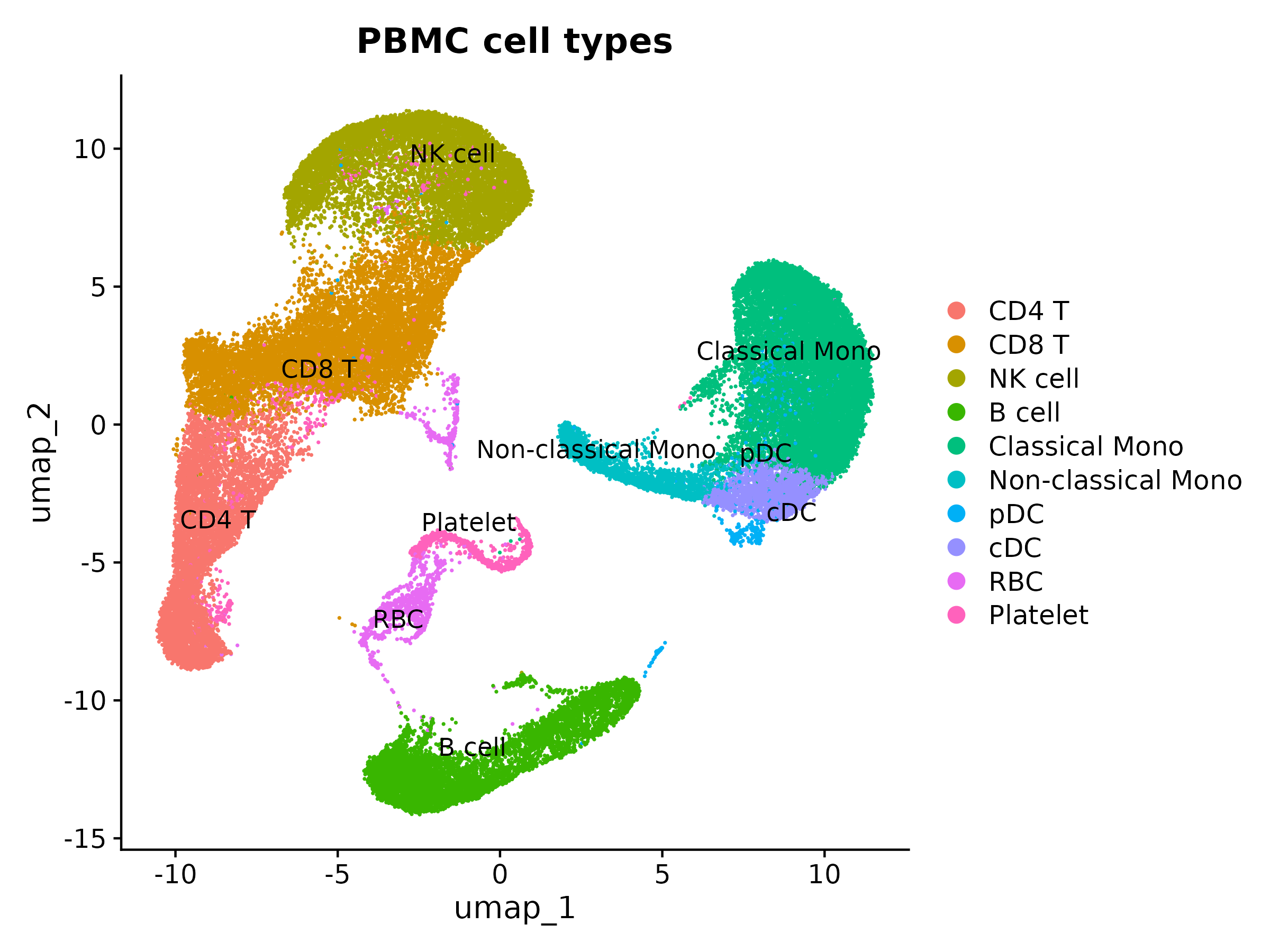
Figure 1: UMAP of 50,125 PBMCs colored by annotated cell type across all conditions.
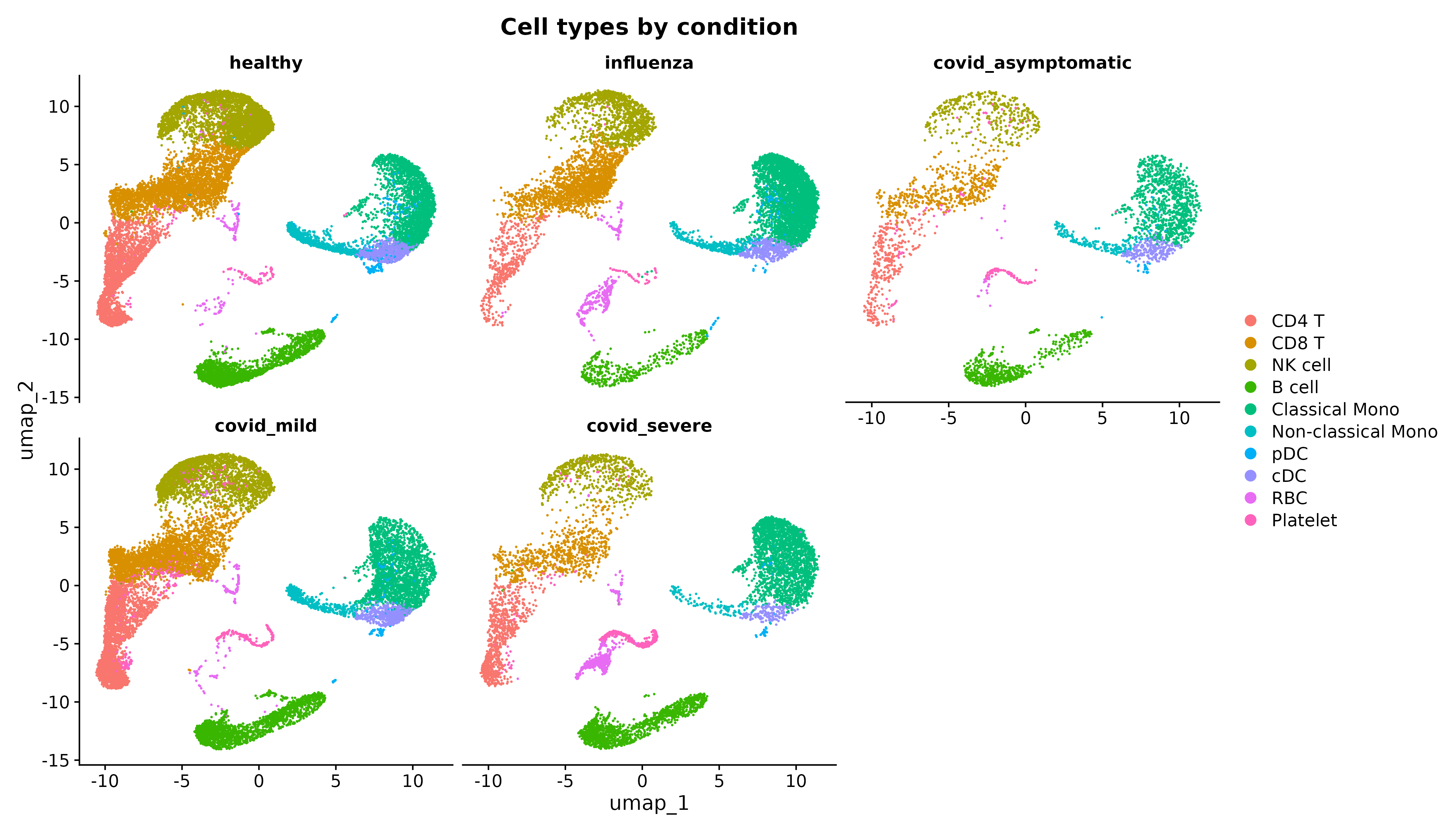
Figure 2: UMAP by condition (healthy / mild COVID-19 / severe COVID-19 / influenza).
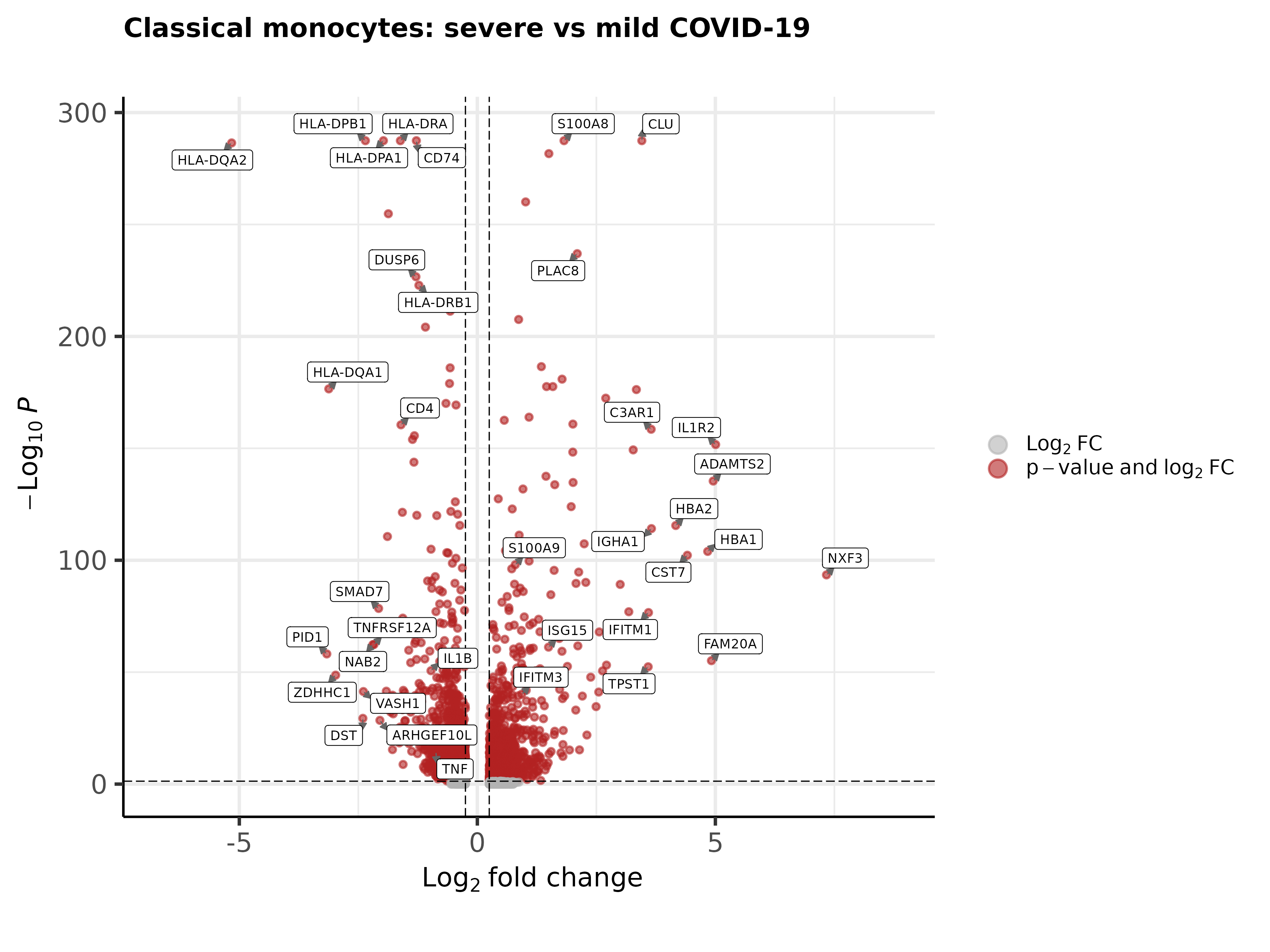
Figure 3: Volcano plot of 2,168 differentially expressed genes (MAST, Bonferroni adj. p < 0.05) in classical monocytes, severe vs. mild COVID-19. Left: HLA class II genes (HLA-DRA, HLA-DPA1/DPB1, CD74) down-regulated in severe disease, reflecting monocyte immunoparalysis. Right: S100A8/A9, CLU, PLAC8, and IFN-stimulated genes (ISG15, IFITM3) up-regulated.
Why This Matters Clinically
COVID-19 severity is not uniform. Clinical outcomes diverge sharply even among patients with similar viral loads and comorbidity profiles. Understanding what separates mild from severe disease is necessary to treatment decisions.
Single-cell resolution reveals immune heterogeneity that bulk sequencing cannot. Bulk RNA-seq averages transcriptional signals across all cells in a sample, obscuring cell-type-specific programs. In severe COVID-19, classical monocytes simultaneously activate TNF/IL-1β–driven inflammation and type I interferon signaling, a co-activation pattern that would be diluted in a bulk readout. Identifying this dual activation as a monocyte-specific signature, rather than a pan-PBMC phenomenon, directly informs which cell compartments are relevant targets for immunomodulation.
Clonal hematopoiesis of indeterminate potential (CHIP) stratifies COVID-19 severity in a clinically actionable way. CHIP, somatic mutations in hematopoietic stem cells, most commonly in DNMT3A and TET2 occurs in roughly 10–15% of individuals over 70 and is already associated with increased cardiovascular and hematologic risk. Choi et al. demonstrate that CHIP(+) patients exhibit a potent IFN-γ response specifically in classical monocytes, mediated through epigenetic reprogramming at poised enhancers. This identifies CHIP status as a biologically grounded risk stratification marker. Elderly COVID-19 patients with CHIP may be predisposed to hyperinflammatory cascades that worsen outcome independently of other comorbidities.
Classical monocytes are a convergence point for infection severity and pre-existing hematopoietic state. The finding that COVID-19 severity, CHIP mutation status, and IFN-γ hyperinflammation all converge on the classical monocyte compartment establishes this cell type as a priority for targeted immunotherapy trials. Single-cell profiling is the only method that produces this cell-type specificity.
Reproducible scRNA-seq reanalysis extends the value of existing public data. Choi et al. demonstrate that published PBMC scRNA-seq datasets retain sufficient resolution for discovery when reanalyzed with new biological hypotheses.
Links
- Original dataset: GSE149689
- Reanalysis paper: Choi et al. 2022, Exp Mol Med
- Original data paper: Lee et al. 2020, Science Immunology